US and Iranian negotiators held their highest-level talks in half a century in Pakistan on Saturday to try to end their six-week war as US President Donald Trump said his military was starting the process of clearing the Strait of Hormuz.
The talks in Islamabad were the first direct US-Iranian meeting in more than a decade and highest-level discussions since the 1979 Islamic Revolution.
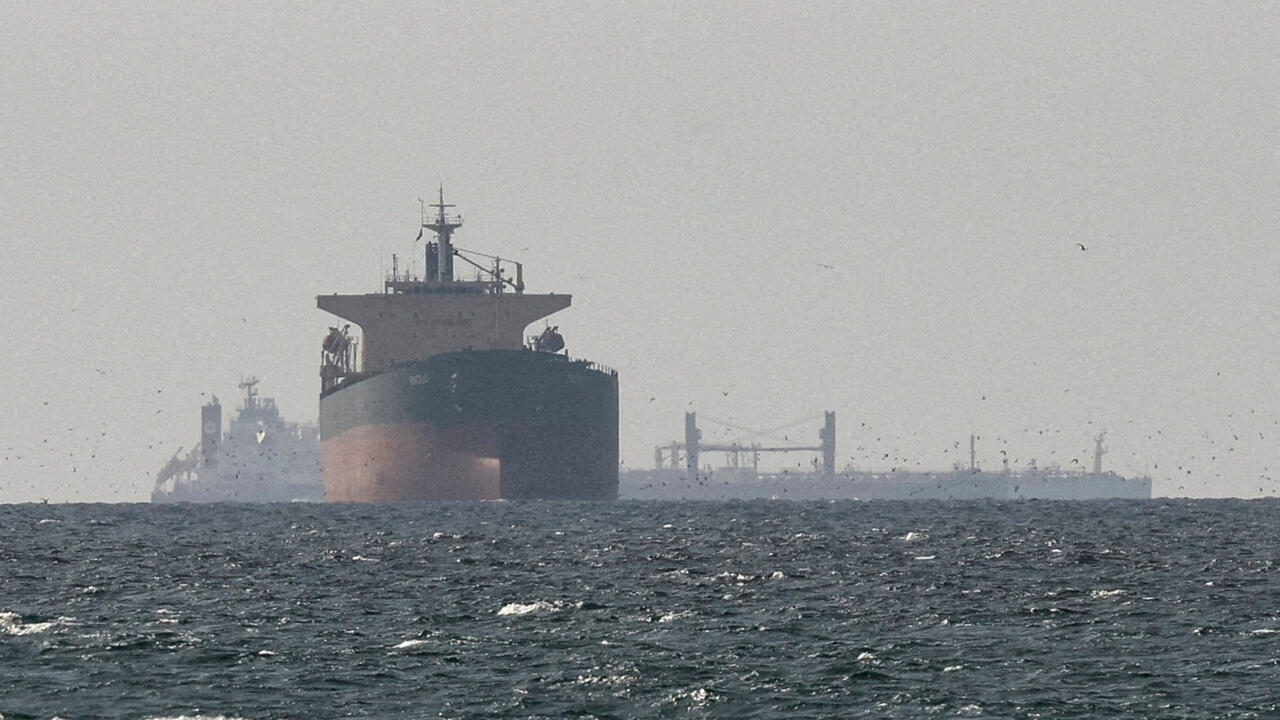
The Strait of Hormuz, a major transit point for global energy supplies that Iran has effectively blocked but Trump has vowed to reopen, is crucial to negotiations between the sides during a two-week ceasefire agreed last week.
Iran’s semi-official Tasnim news agency said the waterway remains among the main points of “serious disagreement” in talks between Iranian and US delegations in Islamabad.
The US military said two of its warships had passed through the strait and conditions were being set to clear mines, while Iran’s state media denied any US ships had transited the waterway.
“We’re now starting the process of clearing out the Strait of Hormuz as a favor to Countries all over the World,” Trump posted on social media.
Ceasefire holds, but Strait of Hormuz remains at a standstill
One of your browser extensions seems to be blocking the video player from loading. To watch this content, you may need to disable it on this site.
US Vice President JD Vance, special envoy Steve Witkoff and Trump’s son-in-law Jared Kushner flew in on Saturday and met Iranian Parliamentary Speaker Mohammad Baqer Qalibaf and Foreign Minister Abbas Araqchi for two hours before a rest, according to a source from mediator Pakistan.
The Iranian delegation arrived on Friday dressed in black in mourning for former Supreme Leader Ayatollah Ali Khamenei and others killed in the war. They carried shoes and bags of some students killed during the US bombing of a school next to a military compound, the Iranian government said.
“There were mood swings from the two sides and the temperature went up and down during the meeting,” another Pakistani source said in reference to the first round of talks aimed at ending the six-week conflict.
Iran’s state-affiliated Nournews said talks would resume later on Saturday night or Sunday.
Pope Leo, in an impassioned appeal on Saturday, urged world leaders to end what he called the “madness of war.”
Different demands
The war has sent global oil prices soaring, killed thousands of people and led to strikes on Gulf Arab states.
Before the talks began, a senior Iranian source told Reuters the US had agreed to release frozen assets in Qatar and other foreign banks. But a US official denied it.
As well as the release of assets abroad, Tehran is demanding control of the Strait of Hormuz, payment of war reparations and a ceasefire across the region including in Lebanon, according to Iranian state TV and officials.
Iran: a mediator on the mediations
One of your browser extensions seems to be blocking the video player from loading. To watch this content, you may need to disable it on this site.

Trump’s stated goals have varied during the campaign, but as a minimum he wants free passage for global shipping through the strait and the crippling of Iran’s nuclear enrichment programme to ensure it cannot produce an atomic bomb.
US ally Israel, which joined the February 28 attacks on Iran that launched the war, has also been bombing Tehran-backed Hezbollah militants in Lebanon and says that conflict is not part of the Iran-US ceasefire.
Mutual distrust is high.
“We will negotiate with our finger on the trigger,” Iranian government spokesperson Fatemeh Mohajerani said on state TV.
“While we are open to talks,we are also fully aware of the lack of trust; therefore, Iran’s diplomatic team is entering this process with maximum caution.”
Tehran’s agenda includes aiming to collect transit fees in the Strait of Hormuz, a chokepoint for about 20 percent of global oil and liquefied natural gas shipments.
The biggest-ever disruption there has fed inflation and slowed the global economy, with an impact expected to last for months even if negotiators succeed in reopening the strait.
Nevertheless, three Liberian- and Chinese-flagged supertankers passed through the strait on Saturday, shipping data showed, marking what appeared to be the first vessels to exit the Gulf since the ceasefire.
Dozens dead in Lebanon
More than 90 people were killed in Israeli air strikes across Lebanon on Saturday, the Lebanese health ministry said, bringing the war’s death toll to 2,020 people, including 165 children, nearly 250 women and 85 medics.
Hezbollah said it had conducted several military operations against Israeli positions on Saturday, both within Lebanese territory and in northern Israel.
Read more‘We thought Beirut was going to collapse’: recounting the deadliest day of the war with Israel
Israeli and Lebanese officials plan talks in the US on Tuesday.
For the US-Iran talks, Islamabad, a city of more than 2 million people, was locked down with thousands of paramilitary personnel and army troops on the streets.
Pakistan’s mediating role is a remarkable transformation for a nation that was a diplomatic outcast a year ago.
“This was a world war that Pakistan stopped. It played a big role and we should appreciate it,” Nasir Khan Abbasi, a dry cleaner, said at a market in Islamabad. “I really like this and I feel great that Pakistan’s name is shining in the world.”
(FRANCE 24 with Reuters)