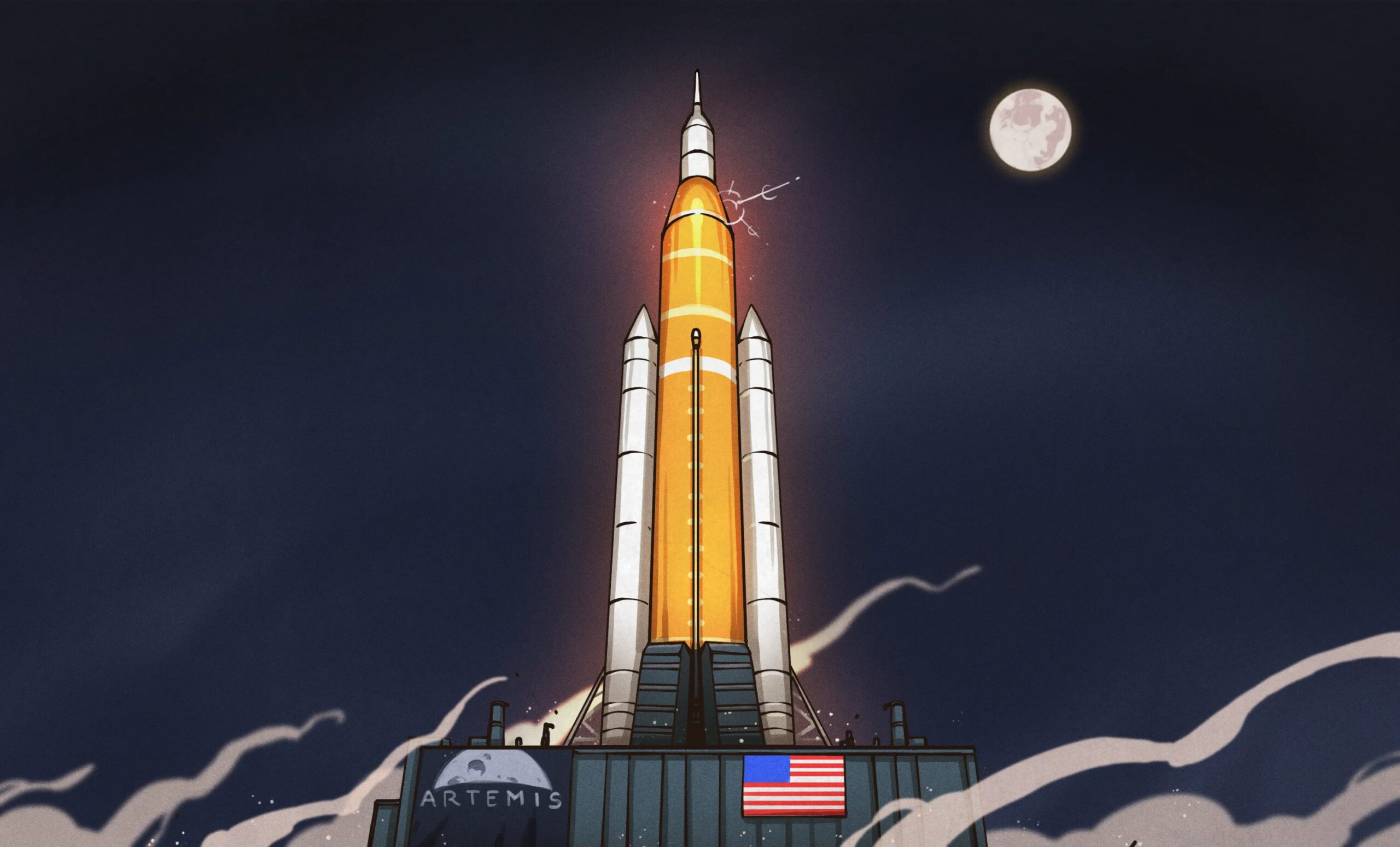
In their recent announcement, NASA has made official what pretty much anyone following the Artemis lunar program could have told you years ago — humans won’t be landing on the Moon in 2028.
It was always an ambitious timeline, especially given the scope of the mission. It wouldn’t be enough to revisit the Moon in a spidery lander that could only hold two crew members and a few hundred kilograms of gear like in the 60s. This time, NASA wants to return to the lunar surface with hardware capable of setting up a sustained human presence. That means a new breed of lander that dwarfs anything the agency, or humanity for that matter, has ever tried to place on another celestial body.

Unsurprisingly, developing such vehicles and making sure they’re safe for crewed missions takes time and requires extensive testing. The simple fact is that the landers, being built by SpaceX and Blue Origin, won’t be ready in time to support the original Artemis III landing in 2028. Additionally, development of the new lunar extravehicular activity (EVA) suits by Axiom Space has fallen behind schedule. So even if one of the landers would have been ready to fly in 2028, the crew wouldn’t have the suits they need to actually leave the vehicle and work on the surface.
But while the Artemis spacecraft and EVA suits might be state of the art, NASA’s revised timeline for the program is taking a clear step back in time, hewing closer to the phased approach used during Apollo. This not only provides their various commercial partners with more time to work on their respective contributions, but critically, provides an opportunity to test them in space before committing to a crewed landing.
Artemis II Remains Unchanged
Given its imminent launch, there are no changes planned for the upcoming Artemis II mission. In fact, had there not been delays in getting the Space Launch System (SLS) rocket ready for launch, the mission would have already flown by now. Given how slow the gears of government tend to turn, one wonders if the original plan was to announce these program revisions after the conclusion of the mission. The launch is currently slated for April, but could always slip again if more issues arise.
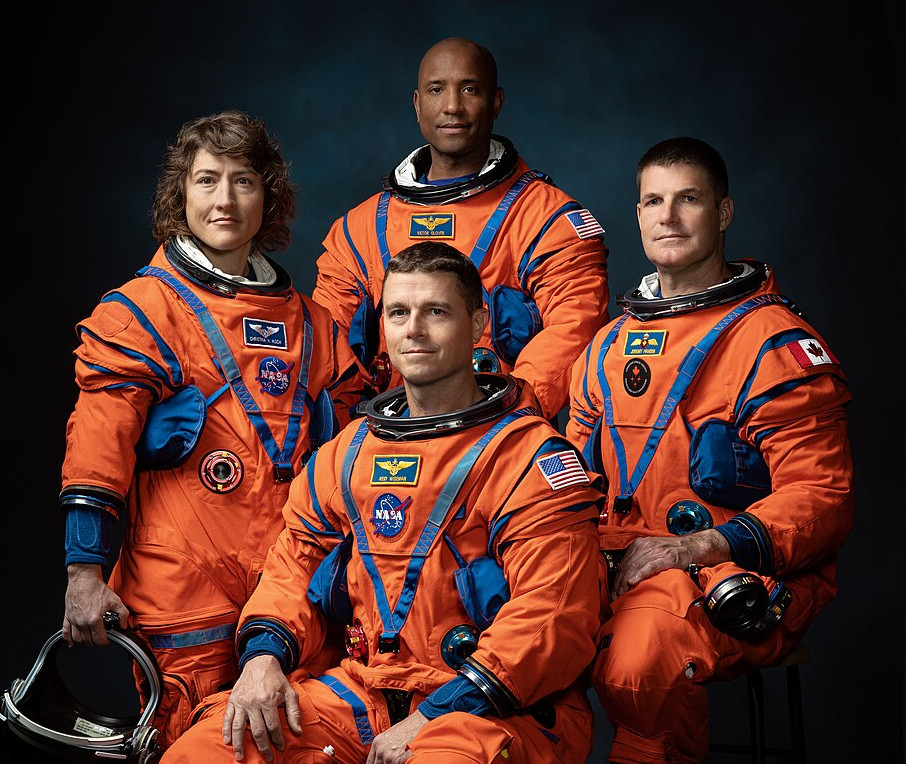
At any rate, the goals for Artemis II have always been fairly well-aligned with its Apollo counterpart, Apollo 8. Just like the 1968 mission, this flight is designed to test the crew capsule and collect real-world experience while in the vicinity of the Moon, but without the added complexity of attempting a landing. Although now, as it was then, the decision to test the crew capsule without its lander wasn’t made purely out of an abundance of caution.
As originally envisioned, Apollo 8 would have seen both the command and service module (CSM) and the lunar module (LM) tested in low Earth orbit. But due to delays in LM production, it was decided to fly the completed CSM without a lander on a modified mission that would put it into orbit around the Moon. This would give NASA an opportunity to demonstrate the critical translunar injection (TLI) maneuver and gain experience operating the CSM in lunar orbit — tasks which were originally scheduled to be part of the later Apollo 10 mission.
In comparison, Artemis II was always intended to be flown with only the Orion crew capsule. NASA’s goal has been to keep the program relatively agnostic when it came to landers, with the hope being that private industry would furnish an array of vehicles from which the agency could chose depending on the mission parameters. The Orion capsule would simply ferry crews to the vicinity of the Moon, where they would transfer over to the lander — either via directly docking, or by using the Lunar Gateway station as a rallying point.
There’s no lander waiting at the Moon for Artemis II, and the fate of Lunar Gateway is still uncertain. But for now, that’s not important. On this mission, NASA just wants to demonstrate that the Orion capsule can take a crew of four to the Moon and bring them back home safely.
Artemis III Kicks the Tires
For Artemis III, the previous plan was to have the Orion capsule mate up with a modified version of SpaceX’s Starship — known in NASA parlance as the Human Landing System (HLS) — which would then take the crew down to the lunar surface. While the HLS contract did stipulate that SpaceX was to perform an autonomous demonstration landing before Artemis III, the aggressive nature of the overall timeline made no provision for testing the lander with a crew onboard ahead of the actual landing attempt — a risky plan even in the best of circumstances.
The newly announced timeline resolves this issue by not only delaying the actual Moon landing until 2028, to take place during Artemis IV, but to change Artemis III into a test flight of the lander from the relative safety of low Earth orbit in 2027. The crew will liftoff from Kennedy Space Center and rendezvous with the lander in orbit. Once docked, the crews will practice maneuvering the mated vehicles and potentially perform an EVA to test Axiom’s space suits.
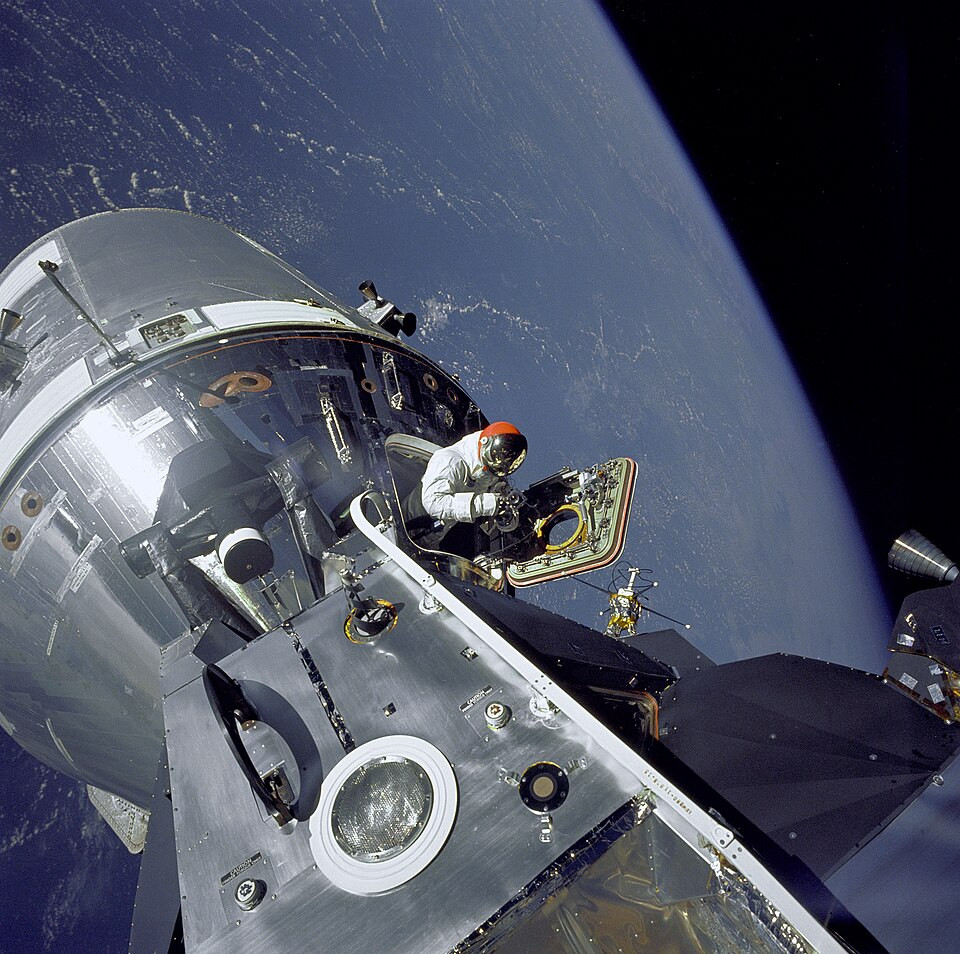
This new plan closely follows the example of Apollo 9, which saw the CSM and LM tested together in Earth orbit. At this point in the program, the CSM had already been thuroughly tested, but the LM had never flown in space or had a crew onboard. After the two craft docked, the crew performed several demonstrations, such as verifying that the mated craft could be maneuvered with both the CSM and LM propulsion systems.
The two craft then separated, and the LM was flown independently for several hours before once again docking with the CSM. The crew also performed a brief EVA to test the Portable Life Support System (PLSS) which would eventually be used on the lunar surface.
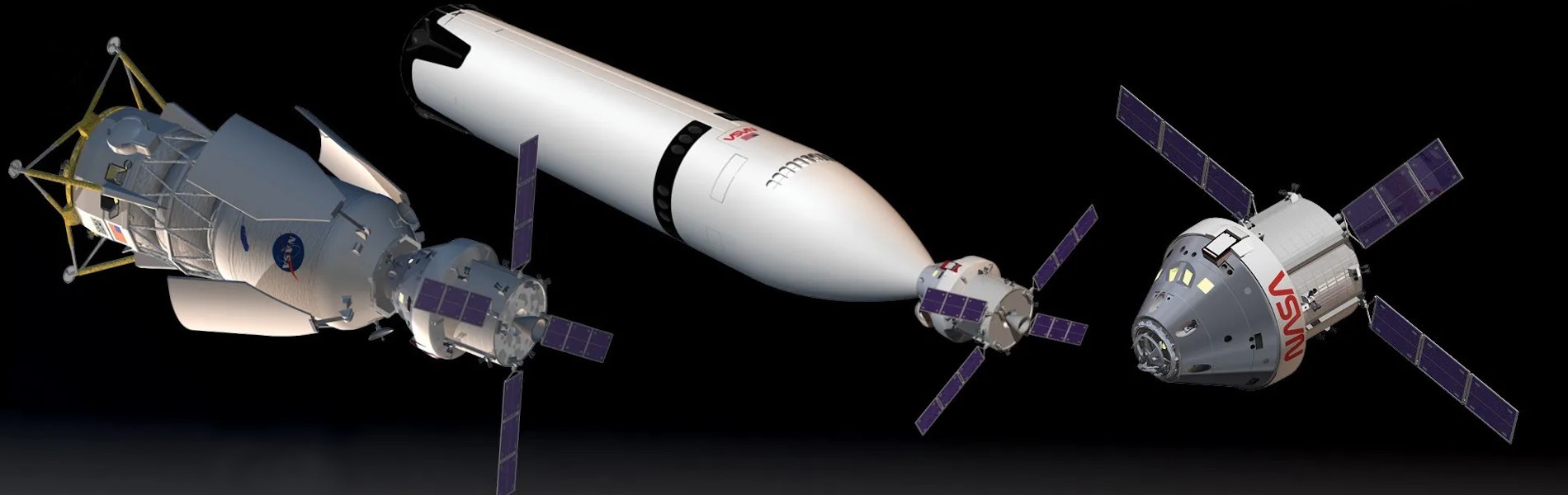
While the Artemis III and Apollo 9 missions have a lot in common, there’s at least one big difference. At this point, NASA isn’t committing to one particular lander. If Blue Origin gets their hardware flying before SpaceX, that’s what they’ll go with. There’s even a possibility, albeit remote, that they could test both landers during the mission.
Artemis IV Takes a Different Path
After the success of Apollo 9, there was consideration given to making the first landing attempt on the following mission. But key members of NASA such as Director of Flight Operations Christopher C. Kraft felt there was still more to learn about operating the spacecraft in lunar orbit, and it was ultimately decided to make Apollo 10 a dress rehearsal for the actual landing.
The CSM and LM would head to the Moon, separate, and go through the motions of preparing to land. The LM would begin its descent to the lunar surface, but stop at an altitude of 14.4 kilometers (9 miles). After taking pictures of the intended landing site, it would return to the CSM and the crew would prepare for the return trip to Earth. With these maneuvers demonstrated, NASA felt confident enough to schedule the history-making landing for the next mission, Apollo 11.
But this time around, NASA will take that first option. Rather than do a test run out to the Moon with the Orion capsule and attached lander, the plan is to make the first landing attempt on Artemis IV. This is partially because we now have a more complete understanding of orbital rendezvous and related maneuvers in lunar orbit. But also because by this point, SpaceX and Blue Origin should have already completed their autonomous demonstration missions to prove the capabilities of their respective landers.
Entering Uncharted Territory

While Apollo was an incredible success, one can only follow its example so far. Despite some grand plans, the program petered out once it was clear the Soviet Union was no longer in the game. It cemented NASA’s position as the preeminent space agency, but the dream of exploring the lunar surface and establishing an outpost remained unfulfilled. With China providing a modern space rival, and commercial partners rapidly innovating, perhaps Artemis may be able to succeed where Apollo fell short.