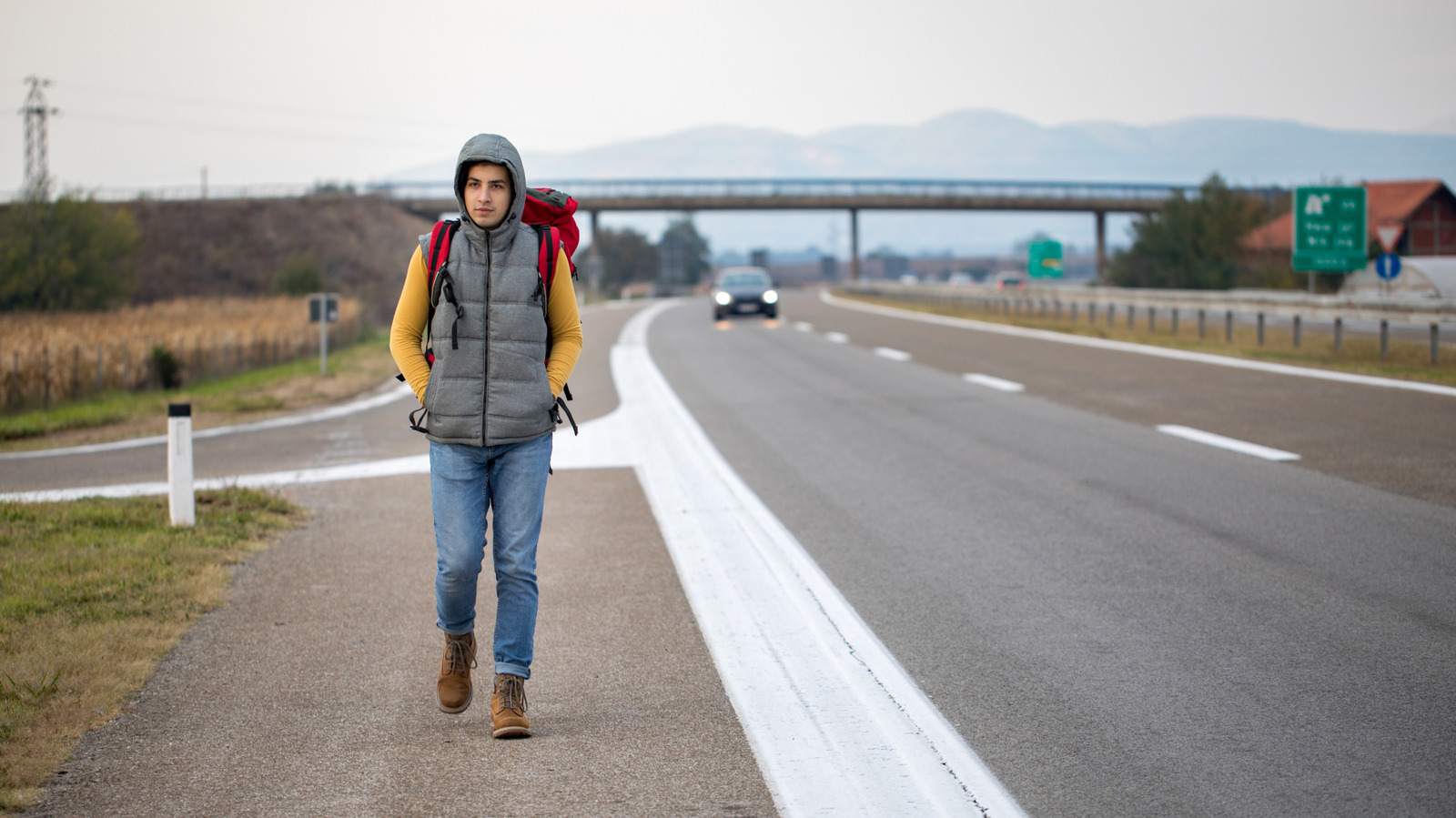
Stephen King’s novel “The Long Walk” came out in 1979. It was technically the very first novel he ever wrote, but it was released under the pseudonym of Richard Bachman. Set in an alternate United States that’s bowed a knee to totalitarianism, it pits 100 teenagers against each other in a marathon-like race where they must walk (not run) at least 4 mph until only one is left to claim the prize. The caveat? Failing to meet that speed requirement — for any reason — resulted in the participant being killed on the spot.
It’s ironic then that while you can walk the fictional roads ruled by a totalitarian regime, it’s generally illegal to walk along the actual interstate highways of real America. There’s a good reason, though — it’s dangerous. According to the U.S. Department of Transportation, some 40,000 – 43,000 people die every year in motor vehicle crashes (about 120 per day). In fact, of the 43,230 people killed in traffic accidents in 2021, 7,388 were pedestrians. That doesn’t even include the millions more who were injured, numbers which should concern everyone, including the U.S. government, which seemingly cares more about automobiles than pedestrian safety.
More recent data from a report conducted by the Governors Highway Safety Association found that in 2024, a similar number of pedestrians (7,148) died. And between 2009 and 2023, pedestrian deaths rose by 80%, far eclipsing the rate of traffic fatalities as a whole. In 2023, nearly 65% of those pedestrian deaths happened on stretches of road that didn’t have a sidewalk, something you won’t find on the side of a highway.
It’s best to avoid walking near highways
Highways are the domain of high-speed hunks of heavy metal that (as of 2024) weigh an average of 4,419 pounds. Having pedestrians mere feet away is like taking a cat to a dog park. Toss in drivers who are increasingly distracted by cell phones, and you have a true recipe for disaster. But not every state deems this dangerous act illegal, and the general rule is more complicated by what each local municipality within a state defines as a highway. That shouldn’t be surprising since the U.S. is chock-full of weird driving laws. For example, in North Dakota — far more rural than California or Florida — it’s perfectly legal to walk or ride a bike on the interstate. Authorities advise against it, but it’s technically legal.
Therein lies one of the big difference-makers: rural areas tend to be more lenient about this than much more populated regions, mainly because the risk of injury is lower. Most states consider a highway to be “any public road designed for vehicle traffic, including freeways, expressways, and major arterials.” Local ordinances, however, might include city streets adjacent to these high-speed thoroughfares. The difference boils down to what’s considered “public streets” that allow pedestrian access versus “high-speed highways” that severely limit such access.
In general, you should only get out and walk in an emergency, such as if your car breaks down or runs out of gas. Also, understand that local traffic laws constantly change. So, if you decide to take a leisurely stroll along the highway, be sure you know the law and any subsequent penalties.