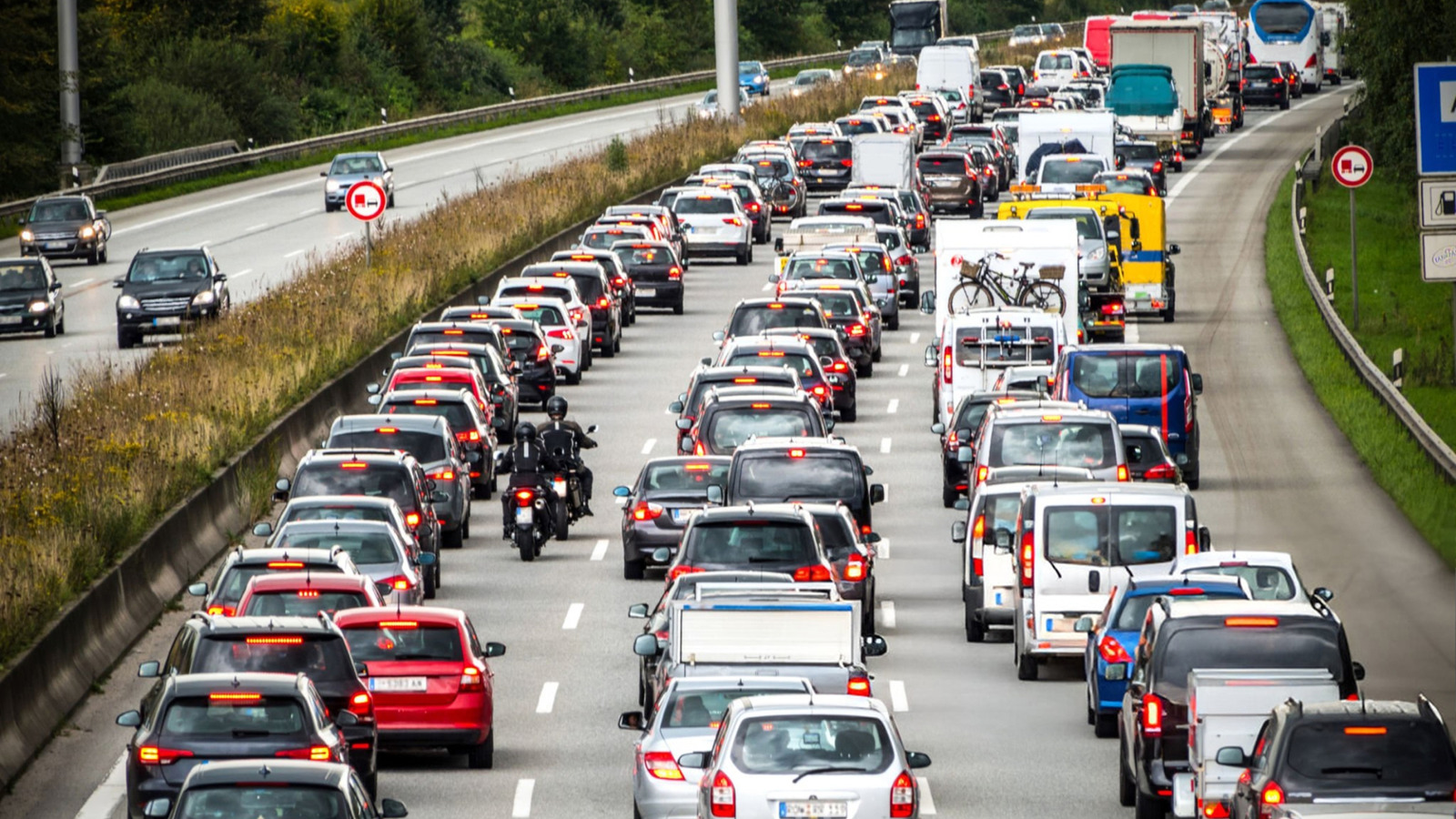
When you’re taking your driving test, the theory and the practical test contain a lot of info that you should know, and there’s also some stuff that your instructor mentions that isn’t necessarily written anywhere, but it’s still a good rule of thumb. Driving tests also prepare you to act appropriately in an emergency, including keeping a safe distance from the car in front of you so you’ll have enough room to slam on the brakes; it helps to have a car with a good braking system as well.
A good rule to follow in this situation is the three-second rule. Generally, the three-second rule states that you should always maintain a distance of roughly three seconds from the car in front of you. If you’ve ever played a racing game, you’ve likely gotten a little text on the screen letting you know how many seconds the car in front of you or behind you is. It works on a similar principle and can stretch to four or five seconds if the conditions are poor. Even though it’s a good idea on paper, it might be a little confusing because the distance between cars is measured in seconds only when those cars are on the race track, not in rush-hour traffic. Let’s delve a little deeper.
Calculating the three-second rule correctly

Since real life does not contain a split timer on our non-existent heads-up displays, let’s see how the three-second rule is applied in practice. Pick a stationary object on the side of the road, like a road sign or a tree. As soon as the rear bumper of the car in front of you passes that object, begin counting to three. If your front bumper passes that exact same object before you finish counting, you are following too closely. Slow down and let them get a little further away to make things safer.
This begs the question: why is the safe distance from the car in front of you measured in time, rather than any other unit of measurement used to calculate distance or length? Mostly, it hinges on one of the most important metrics of accident avoidance and driving in general: reaction times. According to the New South Wales government, drivers generally need about 1.5 seconds to react to something and decide on the next action, and another 1.5 seconds to finally respond to the situation, in this case, avoiding a potential accident. The United States has plenty of dangerous highways, so it’s always a good idea to follow rules like these, as it could potentially save your life.