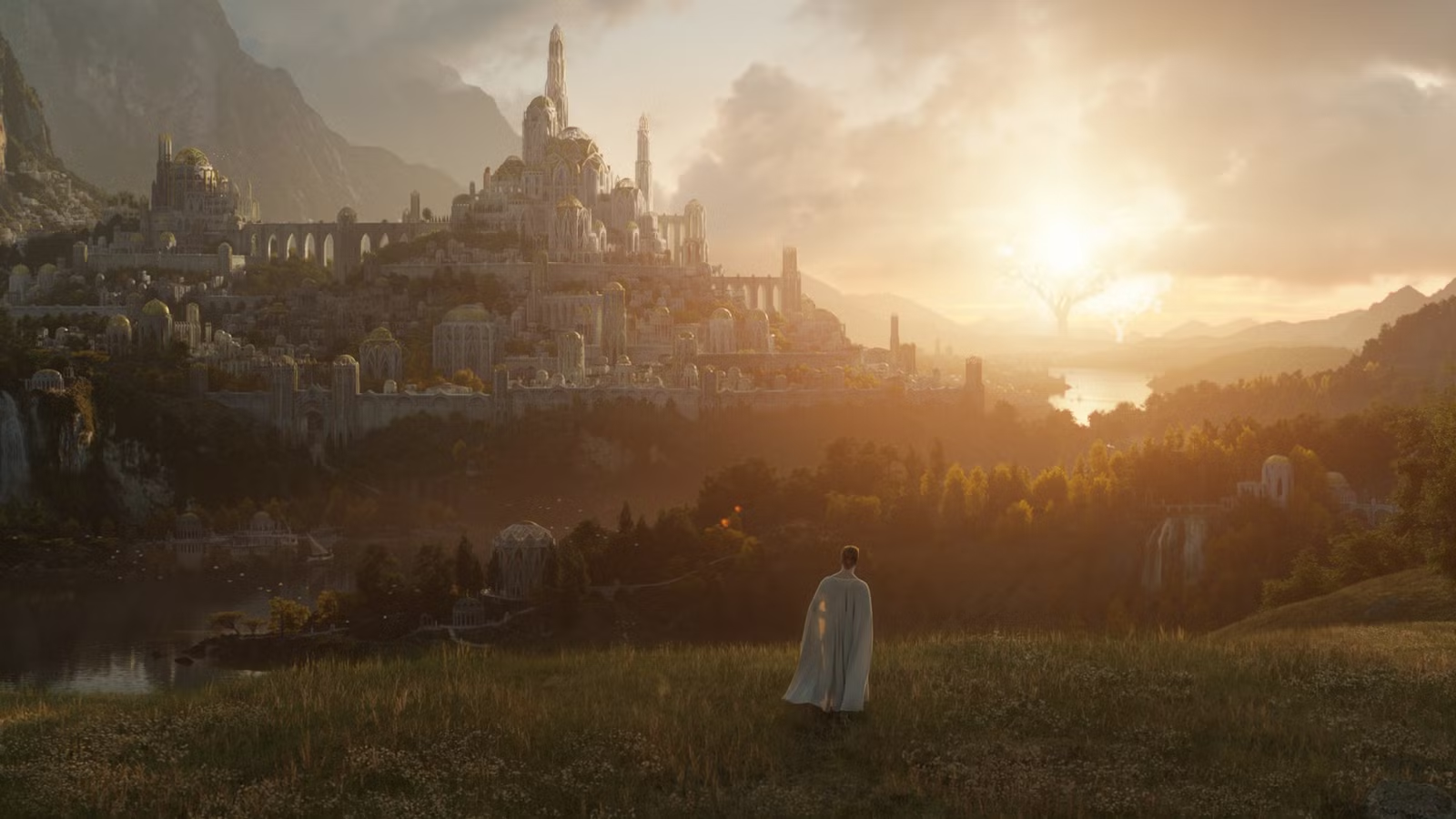
The Lord of the Rings and The Hobbit by J.R.R. Tolkien are some of the most beloved books of the past century, and basically responsible for launching the high fantasy genre as we still know it. Peter Jackson’s The Lord of the Rings movie trilogy is celebrated to this day, but every attempt to bring Tolkien’s world to the screen since then has stumbled. The Hobbit movie trilogy, while profitable, stretched out a short, charming book far too thin, and 2024’s animated feature The War of the Rohirrim made so few waves this may be the first you’re hearing about it. Meanwhile, Prime Video’s Rings of Power TV show has been all of fine, and this franchise deserves better than fine. (Prime Video would have been better off keeping their other, superior high fantasy show.)
As it happens, there is a way out of this quagmire, but it feels like a long shot.
The problem with modern Lord of the Rings movies
Can I interest you in reheated lembas bread?
There are currently two Lord of the Rings movies in development at Warner Bros. One, The Hunt for Gollum, will be directed by Andy Serkis, who played the Ring-starved creature Gollum in Jackson’s trilogy. The movie will cover an incident briefly mentioned in Tolkien’s The Fellowship of the Ring, where the ranger Aragorn and the wizard Gandalf try to track down Gollum to find out information about the One Ring, which will later go on to cause so much trouble.
The other movie was announced in March of 2026: Shadows of the Past, to be written by original Lord of the Rings trilogy scribe Philippa Boyens, latenight host Stephen Colbert, and Colbert’s son Peter McGee. This movie will cover a series of chapters from Fellowship of the Ring: the strange interlude where Hobbits Frodo, Sam, Merry, and Pippin cut through an old forest on their way out of the Shire and bump into a magical man named Tom Bombadil, who sings a lot and wears yellow boots.
Both of these movies represent a stagnancy in The Lord of the Rings franchise: neither are moving beyond the original trilogy, instead dawdling on side quests. The Tom Bombadil interlude has been cut out of almost every adaptation of The Lord of the Rings going back to the 1970s, mostly because it’s a weird little lark that doesn’t add much to the narrative. It’s not unpleasant to read, but it lifts right out. Meanwhile, the hunt for Gollum was left off the page entirely, one figures because Tolkien didn’t think it worth including.
The Lord of the Rings is known for its epic sweep, but these seem like very slight stories to base movies around. That rankles, because there is a fantastic, epic, completely unadapted Lord of the Rings story just sitting there begging to be brought to the screen.
The Silmarillion is the only Lord of the Rings story still worth adapting
Middle-earth, the early years
Tolkien started writing The Silmarillion years before working on The Hobbit or The Lord of the Rings, and even though he spent decades on it, he never quite finished; his son Christopher cleaned up his notes after his father’s death and finally published The Silmarillion in 1977.
The Silmarillion is mainly an account of the First Age of Middle-earth, when the immortal elves were brand new, the dark lord Sauron was just a second-in-command to an even darker lord named Morgoth, and Middle-earth was a lot bigger; a huge chunk of the continent sinks under the waves during the final, earth-shattering battle against Morgoth, leaving behind the Middle-earth we know from Tolkien’s more popular tales.
So The Silmarillion is Lord of the Rings pre-history. It’s not a traditional novel, but a collection of tales spread out over hundreds of years. There’s the tale of Beren and Lúthien, a mortal man and an elven princess who fall in love. To prove to Lúthien’s father that they belong together, Beren and Lúthien break into the lair of Morgoth — a god-like being who could kill them with a look — and manage to steal a priceless jewel called a Silmaril from his crown, giving hope to the other elves and men resisting Morgoth’s tyranny. Or there’s the tale of Túrin Turambar, a man who grows up in an elvish forest, becomes the leader of a band of outlaws, fights a dragon, commits accidental incest, and then dies a tragic death.
Now those stories would make good movies, and they wouldn’t have to be shackled to Jackson’s original movie trilogy.
The tales in The Silmarillion all form one big narrative, but they don’t run together as cleanly as, say, the three books in the original Lord of the Rings trilogy. Whoever adapts them would have to make smart choices about what exactly makes it to the screen, what is summed up in prologue, and how far to go. Adapting such a challenging book would be a risk, but it was also a risk to basically make up a story for The War of the Rohirrim, just not a smart risk. There could be three to five great movies in The Silmarillion, all of them based on completed source material.
So if it’s so great, why hasn’t anyone adapted The Silmarillion?
Summon the lawyers
Part of Hollywood’s hesitance to adapt The Silmarillion could be thanks to how difficult a task it would be, but the more likely reason is because no studio has been able to get ahold of the legal rights. The history of the screen rights to J.R.R. Tolkien’s work is complicated and arcane, but for now it suffices to say that the Tolkien Estate currently holds the rights to The Silmarillion, and it doesn’t seem interested in selling.
And that’s the Estate’s prerogative —far be it from me to say how Tolkien’s descendants should handle his legacy — but if I were a high-powered Hollywood executive, I would go to them on my hands and knees and offer them whatever I had to in order to get them to turn over the rights, because these latest Lord of the Rings movies, these lukewarm plates of reheated nachos, are not cutting it.
If you can’t get what you want…

9 reboots of classic movies that are actually worth a watch
These reboots surpass the originals, bringing a whole new take on the films you already love.
Honestly, the prospect of a big or small screen adaptation of The Silmarillion seems pretty unlikely at this point, although I sincerely hope that changes. At least there are a lot of other fantasy stories to look forward to, including a third season of The Lord of the Rings: The Rings of Power coming down the the pike this year. And beyond Tolkien, Apple is working on adapting some of Brandon Sanderson’s fantasy works, which has been a long time coming.
The Silmarillion may be the great white whale of unrealized fantasy adaptations, but people will be eating well regardless.

- Release Date
-
September 1, 2022
- Network
-
Amazon Prime Video
- Showrunner
-
John D. Payne, Patrick McKay, Louise Hooper, Charlotte Brändström, Wayne Yip
- Directors
-
J.A. Bayona, Sanaa Hamri
- Writers
-
Patrick McKay, John D. Payne, J.R.R. Tolkien, Justin Doble, Jason Cahill, Gennifer Hutchison, Stephany Folsom, Nicholas Adams
- Franchise(s)
-
The Lord of the Rings
-

-

-

Charles Edwards
Lord Celebrimbor
-

Markella Kavenagh
Nori Brandyfoot