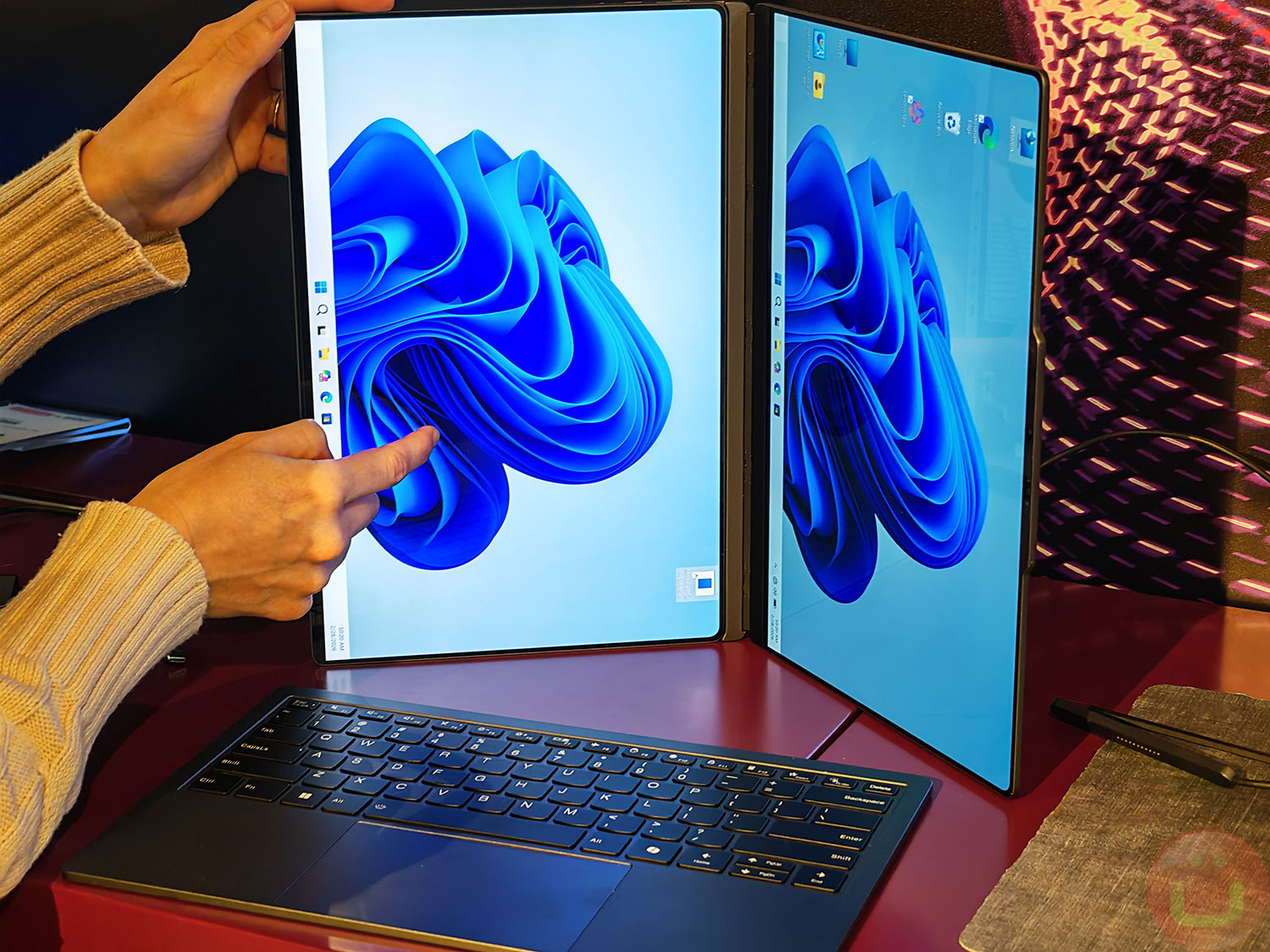
At MWC 2026 in Barcelona, Lenovo showed me one of the most impressive hardware experiments on its booth floor: the ThinkBook Modular AI PC Concept. At first glance, it looks like a fairly standard 14-inch notebook. Clean lines, a thin chassis, and a business-friendly design. Nothing unusual.
Then you turn it around.
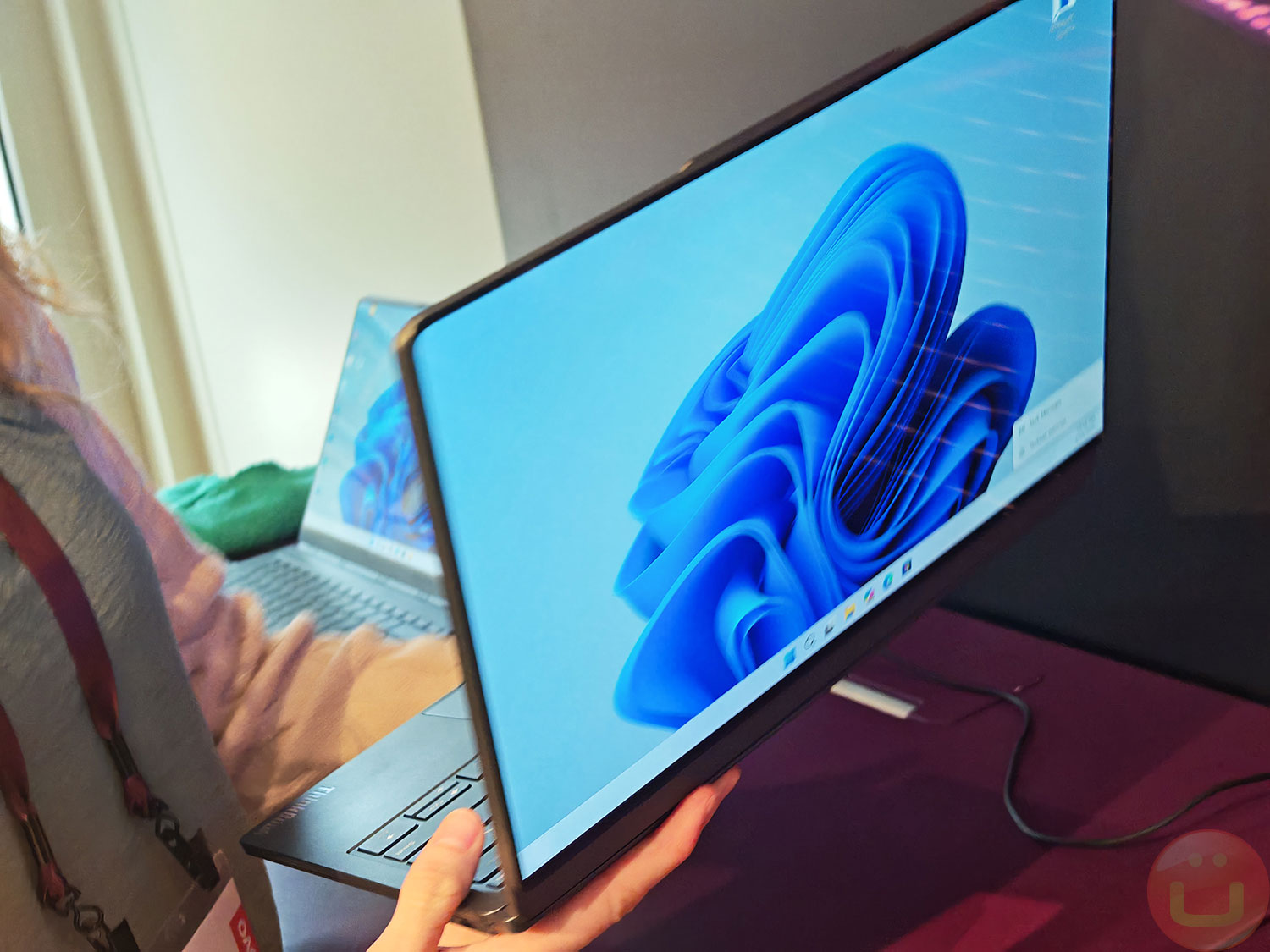
On the back of the lid, there is a second 14-inch world-facing display. Lenovo calls it a world-facing screen, and it immediately changes how you think about the device. Between the rear feet, there is an integrated kickstand that blends almost invisibly into the chassis. Pop it out, and the system starts to reveal what it is really about.
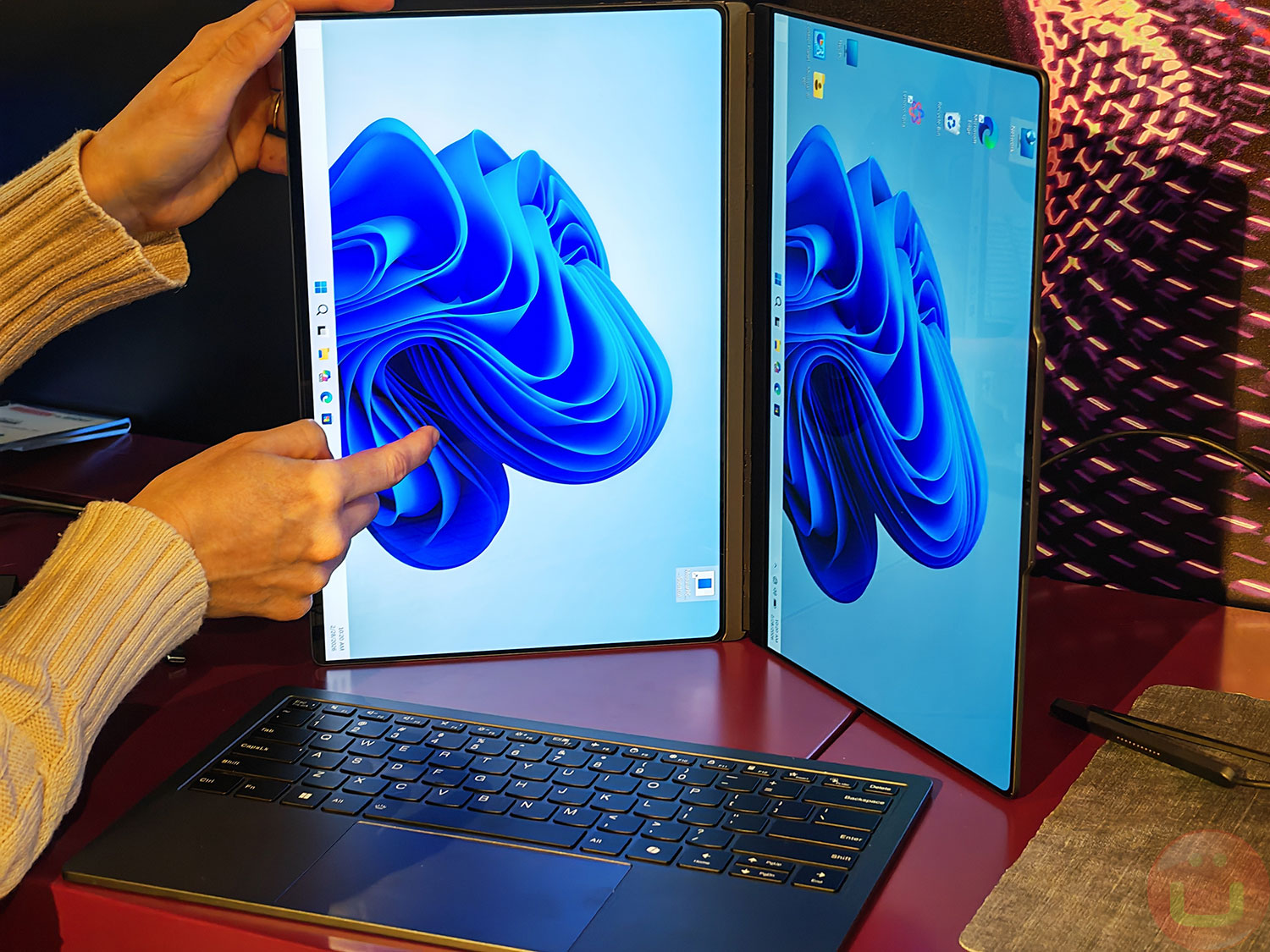
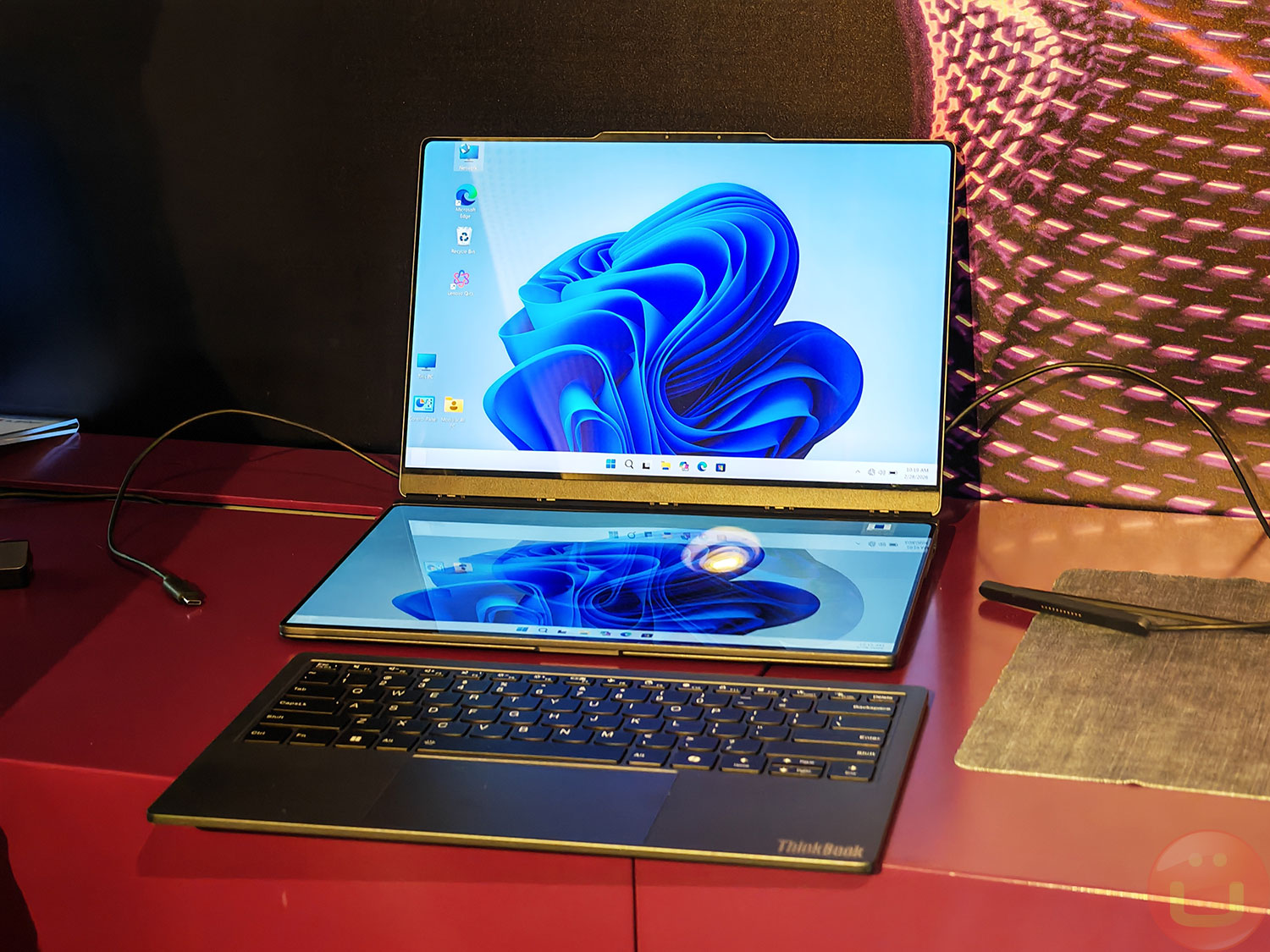
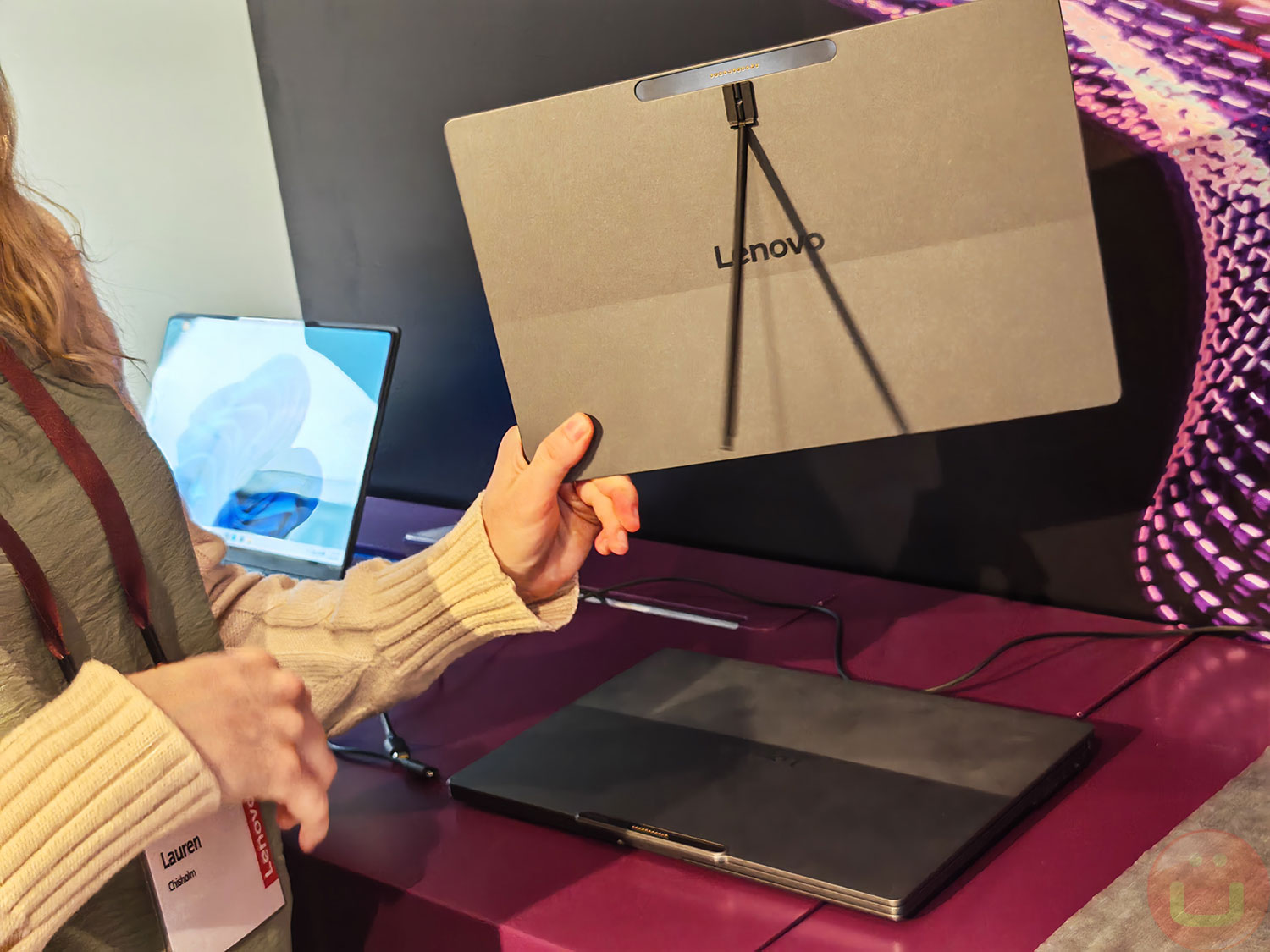 During the demo, Lenovo walked me through the transformations. The secondary display can be lifted off and magnetically attached in different ways. With a USB-C connection to the Magic Bay interface, it becomes a fully functional travel monitor. You can use it in landscape or portrait mode, and auto-rotation handles the orientation changes. The demo unit needed a little persuasion to rotate properly, but that is the reality of early concepts.
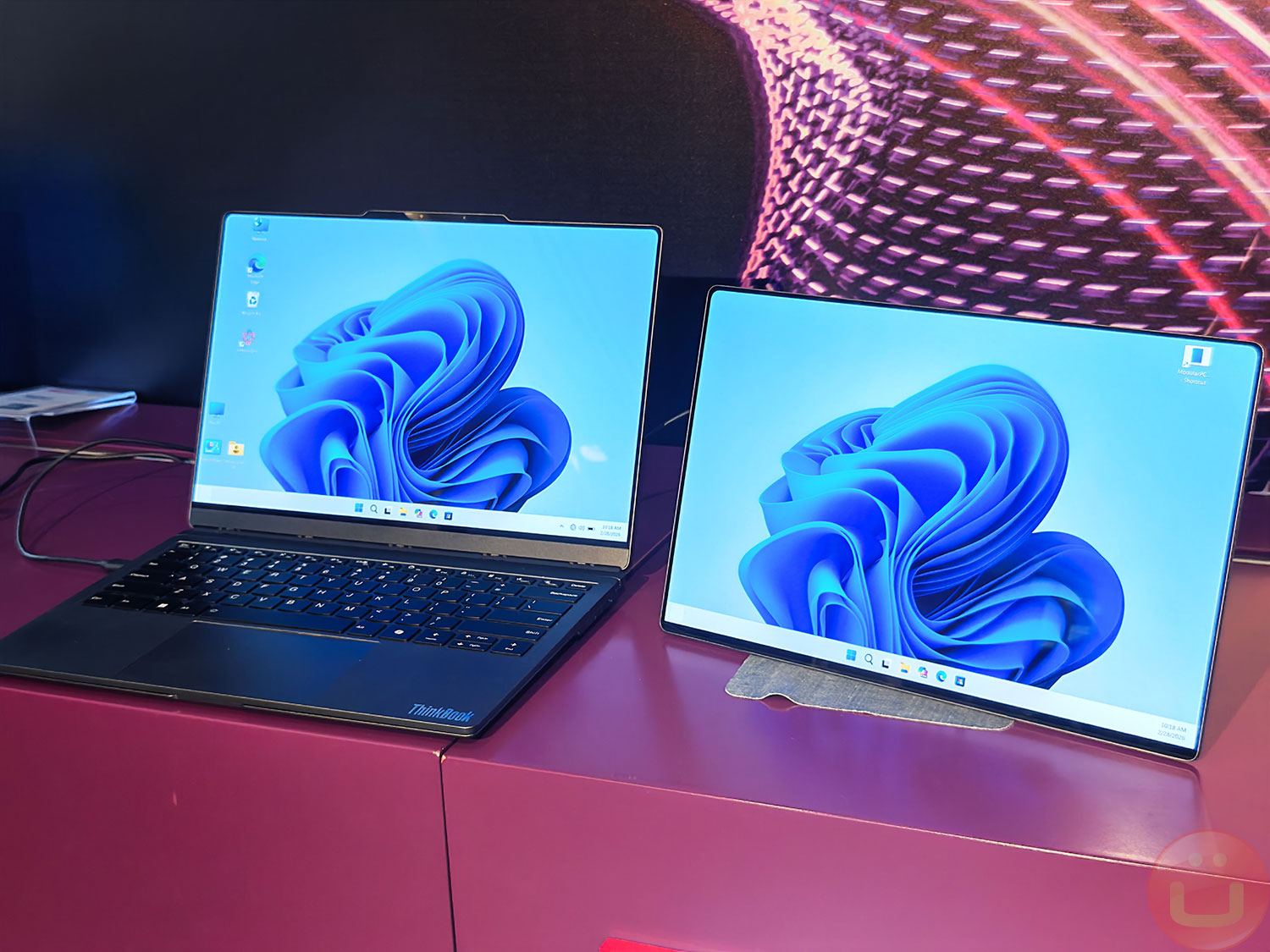
The pretty compact 14-inch laptop expands the workspace when needed. In some configurations, the combined viewing area reaches roughly 19 inches. You can mount the extra display on top of the lid to enable face-to-face collaboration across the table. You can position it beside the laptop, using the kickstand, for a dual-screen setup in a hotel room. Or you can swap the display and keyboard positions to create a more immersive dual-screen workstation.
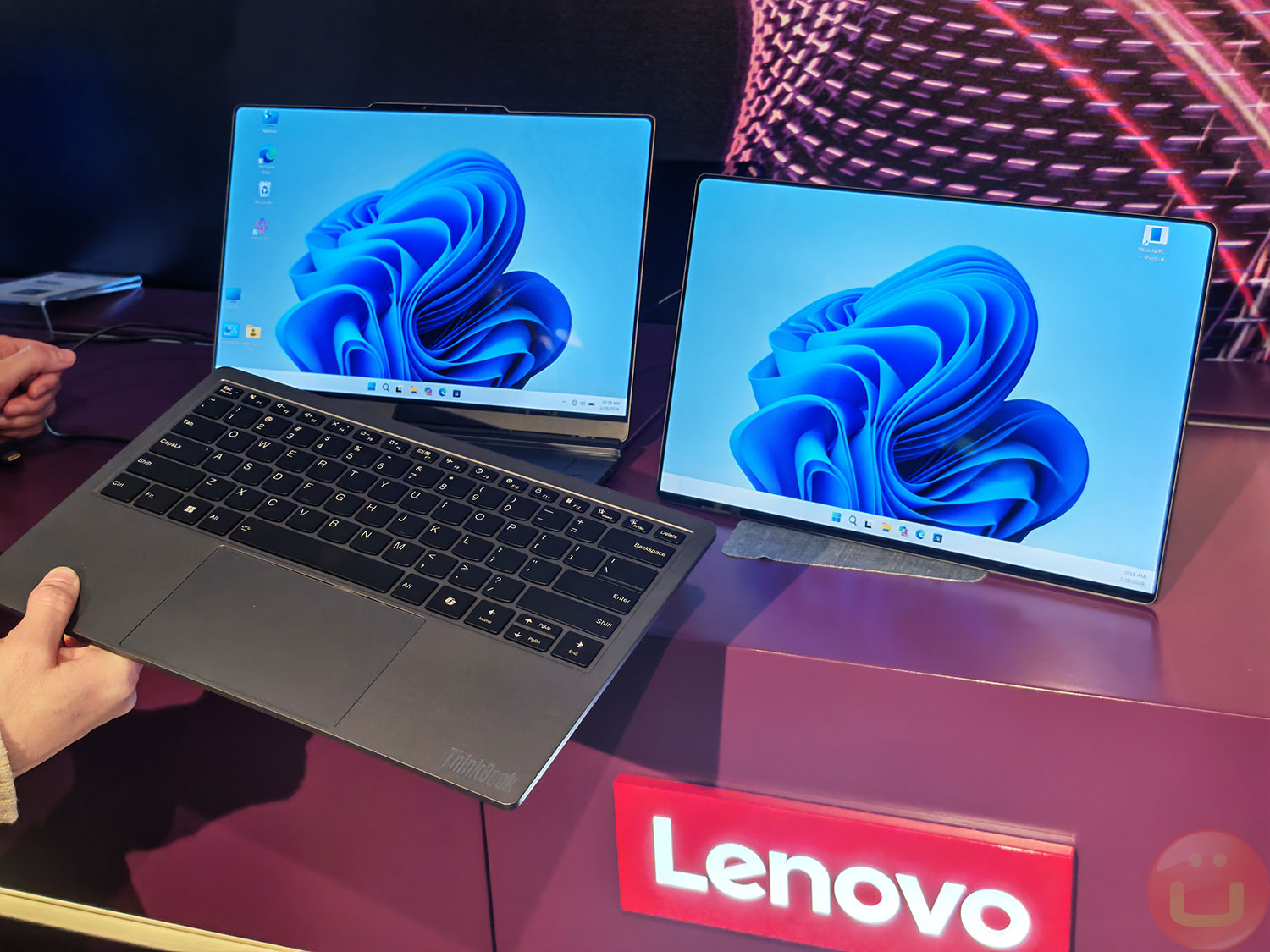 The keyboard itself detaches and works over Bluetooth. That means once you separate the screens, you can push them back and use the keyboard independently, more like a desktop setup.
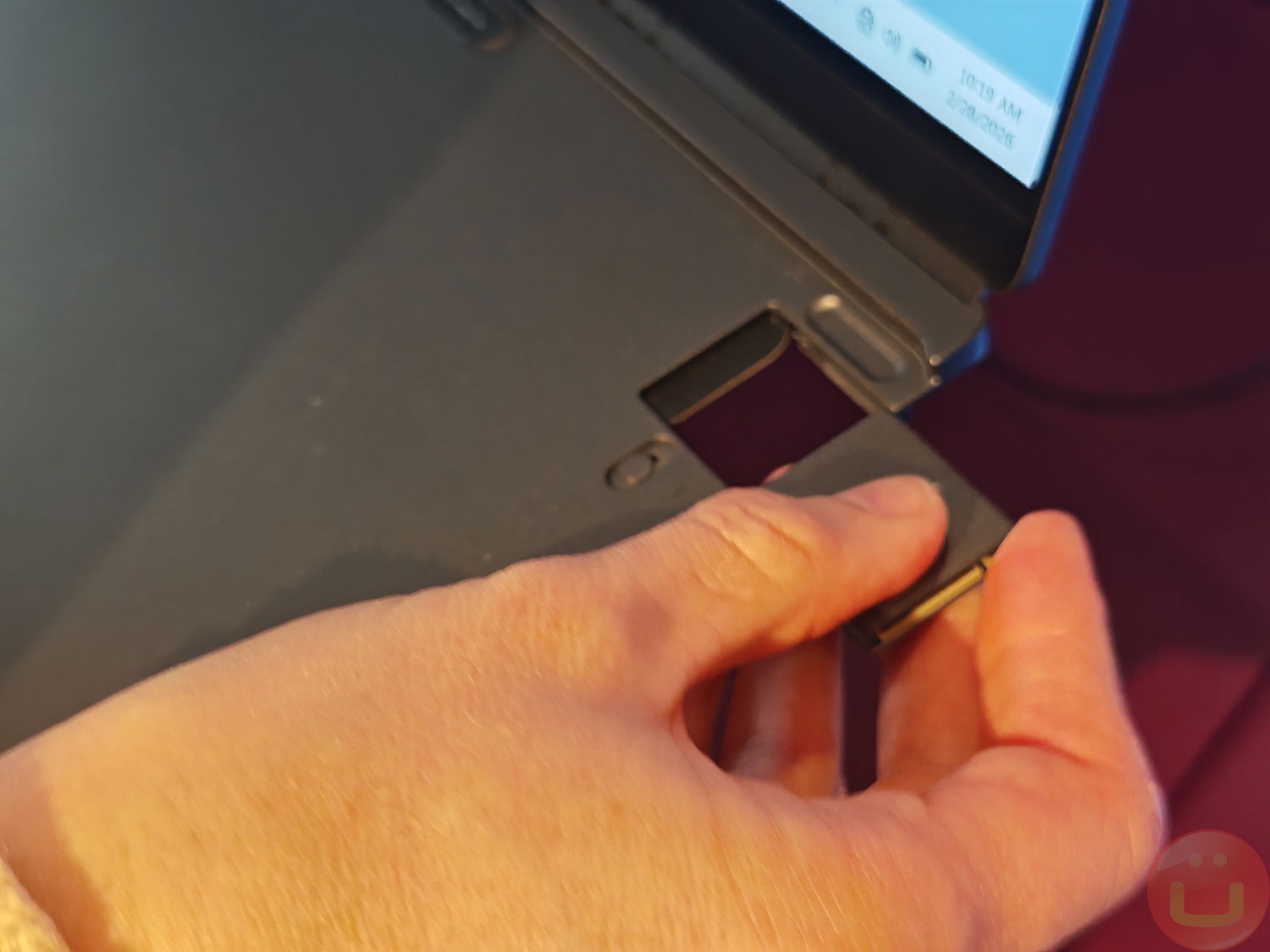
Then there are the ports. Instead of fixed I/O, the ThinkBook Modular AI PC Concept uses swappable port modules on the sides. Lenovo showed USB-C and HDMI modules that you can move from one side to the other depending on your cable management needs. Want HDMI on the left instead of the right? Swap it. Prefer two USB-C ports together? That works too. There is even a small carrying case for extra port modules, so connectivity becomes part of the modular system.
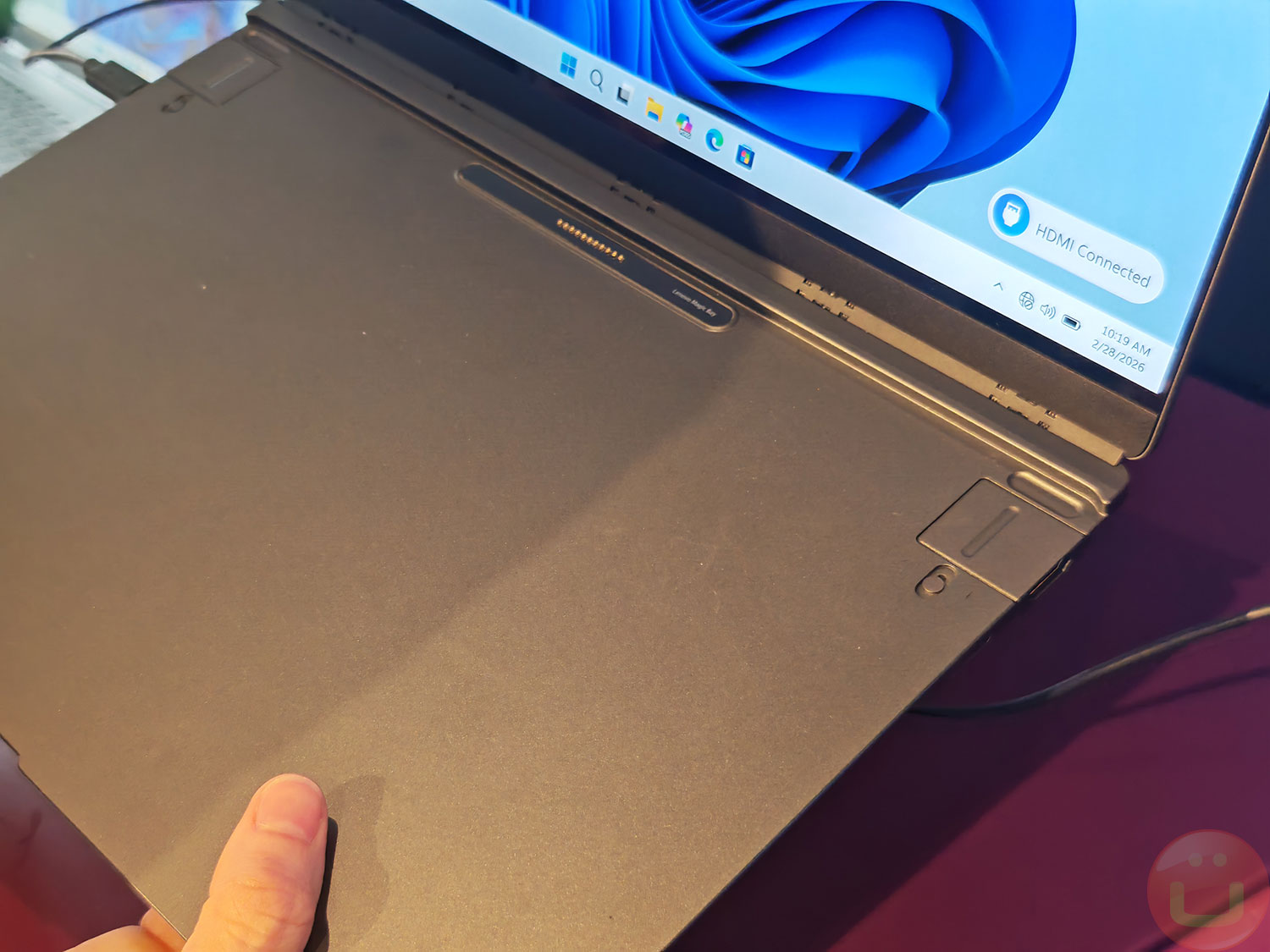
 Underneath, pogo-pin connectors handle power and data between modules, so everything feels like a single integrated machine rather than a collection of loose parts. Despite all the moving pieces, the build did not feel fragile in hand, which is critical if Lenovo ever decides to ship something like this.
The “AI PC” label here likely points to the combination of adaptable hardware and locally processed, context-aware AI assistance.
The level of workspace flexibility packed into what still looks like a standard laptop chassis is impressive, and it will certainly boost users’ productivity.
ThinkBook Modular AI PC Concept stands out as one of the more memorable prototypes I have seen at MWC, and it deserves to be among our Ubergizmo’s Best of MWC 2026.
Filed in . Read more about Lenovo, MWC, MWC 2026, Prototype and Windows.